
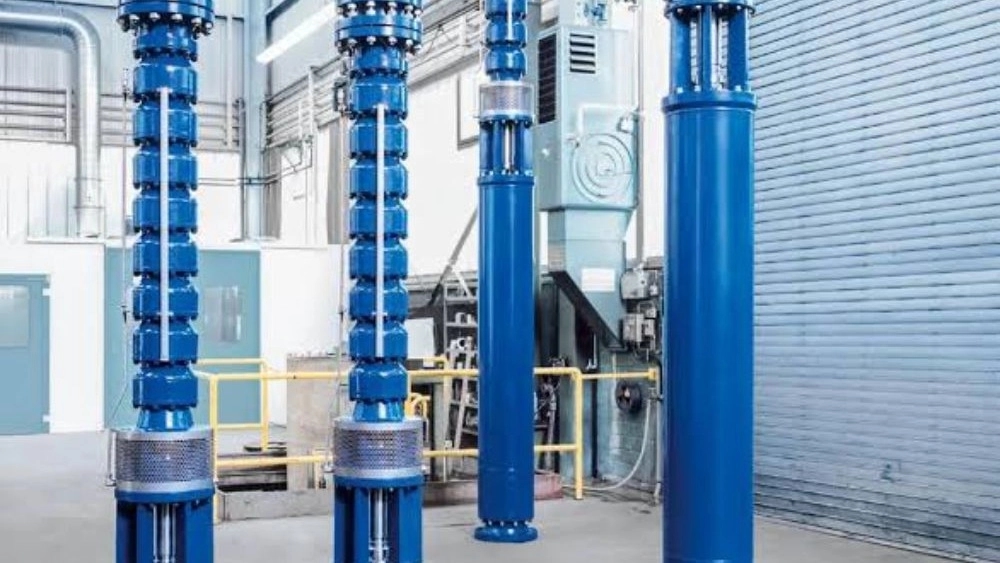
K.S.B design submersible pumps are among the most widely used and efficient equipment in the water supply, agriculture and water transfer industries from deep wells. These equipments play a vital role in fluid transfer systems due to their advanced engineering design and high efficiency. However, maintaining optimal performance and increasing the useful life of these devices requires special attention to preventive maintenance. Meanwhile, K.S.B Design Submersible Pumps Periodic Service and Oil Change Guide serves as a basic reference for operators and technicians to avoid sudden and costly breakdowns. Gasar Pump Industries, with years of experience in the production and localization of these pumps, always emphasizes the importance of basic maintenance of these equipments.
The importance of periodic service of K.S.B. design floating pumps
Submersible pumps work continuously in submerged environments and under high hydraulic pressures. Failure to pay attention to the state of the internal parts such as bearings, mechanical seals, and the quality of the lubricant can lead to water infiltration into the motor and ultimately the complete burning of the electric motor.
Regular periodic service not only prevents the sudden stoppage of water supply systems, but also keeps the pump's electrical energy consumption in the most optimal possible state. Proper lubrication of moving parts reduces friction and prevents energy loss in the form of heat. Gasar Pumping Industries, as one of the pioneers of this industry, has designed its products in such a way that access to parts requiring service is as easy as possible.
Getting to know the structure of the lubrication and sealing system of K.S.B
To properly perform the steps of the Periodic Service Guide and Oil Change of K.S.B Design Submersible Pumps, we must first familiarize ourselves with the structure of the sealing system and the oil chamber of this equipment. In these pumps, the oil chamber is located between the pump and the electric motor. The main task of this chamber is to lubricate mechanical seals and also to create a protective barrier against water penetration into the engine.
The mechanical seals used in the K.S.B design are usually made of silicon carbide or tungsten carbide, which have high resistance to wear. The oil in this chamber, in addition to lubricating the flood plates, also transfers the heat caused by friction to the body and facilitates the cooling of the parts. Gasar Pumping Industries uses the highest quality sealing parts in the process of manufacturing these equipments to increase the service intervals.
Appropriate timing to perform periodical services
Determining the exact time to perform periodical services depends on the working conditions of the pump, the amount of daily working hours and the quality of the output water. However, a standard schedule for K.S.B design submersible pumps is suggested as follows:
- Weekly and monthly services: Check the current consumption of the electric motor, control the operating noise and check for abnormal vibrations of the body.
- Six-month services: Measure the insulation resistance of the motor winding and test the current leakage.
- Annual services: This stage, which is the main part of the periodic service guide and oil change of the submersible pumps It includes K.S.B, it is dedicated to emptying the chamber oil, checking its quality, controlling the health of mechanical seals and changing the lubricant.
Gazar Pumping Industries recommends that in wells with a high amount of sand, shorter periodic service intervals should be considered in order to prevent damage to the impellers and the sealing system.
Step-by-step procedures for changing oil in K.S.B. design floating pumps
Oil change operation is one of the most sensitive parts of submersible pump maintenance. Doing this process incorrectly can lead to lubricant leakage or water entering the electric motor. The following steps must be done carefully and following safety principles:
1. Preparation and disconnection of electricity
Before any action, cut off the electric current to the electric motor completely and make sure that it is not reconnected. Carefully remove the pump from the well and wash its outer body well so that the mud and deposits on the body do not penetrate into the oil chamber.
2. Draining old oil
Place the pump horizontally on a stable support; so that the oil drain cap is facing down. Open the lid slowly. Allow the oil to drain completely into a graduated container. Checking the volume and quality of the drained oil is very important, which we will discuss in detail in the next sections.
3. Checking the quality of drained oil
The drained oil is a mirror of the internal health of the pump:
- Clear oil without color change: indicates the complete health of the seals and no water intrusion.
- Milk colored or emulsified oil: indicates water infiltration into the oil chamber due to failure of the mechanical seal on the pump side. In this case, the seals must be replaced.
- The presence of metal particles in the oil: indicates severe wear of the internal parts or the failure of the bearings, which requires the complete disassembly of the pump.
4. Washing the oil tank
If the drained oil contains dirt or water, flush the chamber with a small amount of clean oil to remove suspended particles and residual moisture.
5. New oil injection
According to the technical instructions of gas pumping industry, inject the right oil with the specified volume into the chamber. Usually, about 10-15% of the volume of the chamber should be left empty for the thermal expansion of the oil.
6. Replacing the sealing washers and closing the lid
Always replace the gasket around the drain plug every time you change the oil to make sure it is completely sealed. Then tighten the cap with the appropriate torque.
Choosing the right oil for K.S.B. design submersible pumps
The type of oil used has a direct effect on the performance of mechanical seals and heat transfer. Considering that submersible pumps are usually used to transfer drinking water or agricultural water, choosing the type of oil is of double importance.
Oils used in this equipment must be non-toxic, have appropriate viscosity and high thermal stability. Usually, medical paraffinic oils or pharmaceutical grade transformer oils are used for this purpose so that in case of possible leakage, the underground water sources will not be contaminated. Gasar Pumping Industries has specified the exact standard and appropriate viscosity grade for each model in its product manuals.
Key points in the technical inspection of parts during service
Periodical service is not limited to oil change only. Technicians should carefully check the following items when the oil container is open:
- Checking the amount of wear of propellers: K.S.B design propellers are highly efficient due to their special hydraulic design, but the continuous collision of suspended particles can wear out their edges.
- Rotor and shaft health test: Shaft deviation or rotor laziness causes imbalance and as a result faster wear of mechanical seals and bearings.
- Monitoring the condition of the power cable: Check the cables entering the electric motor for any cuts, rot or loss of insulation. The place where the cable enters the engine body (cable gland) must be completely sealed.
The role of gas pumping industry in improving quality and after-sales service
Gazar Pumping Industries produces products with high durability and compatible with Iran's climatic conditions and water resources by localizing the standards and technologies of the K.S.B project. The use of high-quality materials and strict quality control in all stages of production has caused the products of this collection to have less need for frequent repairs.
In addition, Gasar Pumping Industries has provided a safe platform for buyers by providing technical support services and providing standard spare parts so that they can easily access original parts such as mechanical seals, o-rings and sealing washers during periodic services. The use of original Gasar spare parts guarantees the return of the pump to optimal working conditions after each service period.
Common mistakes in service and maintenance of submersible pumps
Ignorance of technical details can turn the service process into a damaging factor. Some of the most common mistakes are:
- Completely filling the oil chamber without taking into account the expansion space: This will increase the internal pressure of the chamber due to the heating of the pump during operation and damage the seals.
- Using inappropriate industrial oils: Oils with high viscosity add extra load to the engine and disrupt heat transfer.
- Ignoring the replacement of the cap gasket: Reusing gaskets Deformed is the main factor of gradual penetration of water into the oil chamber.
By following guidelines for periodic service and oil change of K.S.B design submersible pumps provided by gasar pumping industry experts, you can prevent all these operational errors and maximize the efficiency of water supply systems.